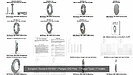
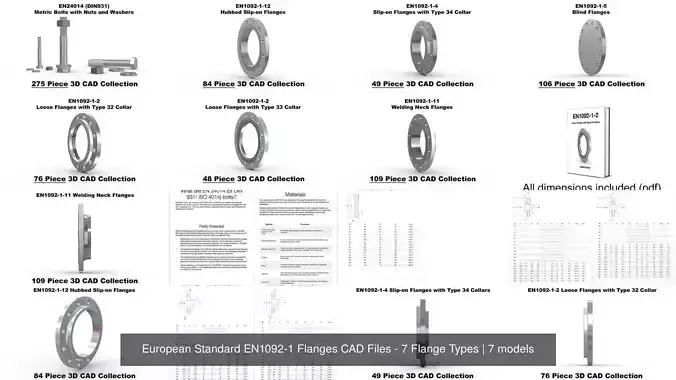
About EN1092-1 Type 5 Blind Flanges
In the intricate world of piping systems, where fluid control and safety are paramount, EN1092-1-5 blind flanges play an indispensable role. These unassuming components are part of the European standard EN1092-1, which meticulously specifies the dimensions, materials, and technical requirements for various types of flanges. EN1092-1-5, commonly known as the blind flange, stands out as a critical element within this standard, offering an essential solution for closing off pipe ends and ensuring the safety and integrity of piping systems. In this article, we will explore the features, applications, and advantages of EN1092-1-5 blind flanges, shedding light on their vital role in various industrial applications.
Understanding EN1092-1-5 Blind Flanges
EN1092-1 is a comprehensive European standard that governs flange usage in piping systems. This standard encompasses several flange types, each designed for specific purposes. Among these, the EN1092-1-5 blind flange distinguishes itself as a versatile and crucial choice. Blind flanges are designed to close off the end of a pipe, valve, or equipment and prevent the flow of fluids or gases. These flanges play an essential role in piping systems, particularly in situations where isolation, inspection, or maintenance is required.
Key Features of EN1092-1-5 Blind Flanges
-
Solid Plate Design:The defining feature of blind flanges is their solid plate design, which effectively seals the end of a pipe, ensuring zero leakage.
-
Standard Compliance: EN1092-1-5 blind flanges adhere to the stringent European standard, ensuring uniformity in design and performance. They are coded as type 5 within this standard, making them easily identifiable and compatible with other flange types.
-
Size and Pressure Ratings: These flanges come in various sizes and pressure ratings to suit the specific requirements of different applications, ensuring compatibility and reliability.
Applications of EN1092-1-5 Blind Flanges
EN1092-1-5 blind flanges are used across a wide range of industries due to their critical role in piping systems. Some notable applications include:
-
Petrochemical Industry: Blind flanges are widely employed in refineries and chemical processing plants. They are used to seal off pipes and equipment during maintenance, inspections, or when particular sections of the system need to be isolated.
-
Water Treatment Plants:In water treatment facilities, blind flanges are utilized to close off pipes and valves temporarily. This is especially important during maintenance or repair work, as it allows for the isolation of specific sections of the system.
-
Oil and Gas Industry:In the oil and gas sector, blind flanges are crucial for ensuring the safety and integrity of pipelines. They are used to seal off pipe ends during construction, inspections, or in emergency situations.
-
Steam and Heat Exchangers: Industries that use steam or heat exchangers rely on blind flanges to close off sections of their systems during maintenance and repair work.
Advantages of EN1092-1-5 Blind Flanges
-
Leak Prevention: Blind flanges effectively seal off the end of a pipe, preventing any leaks or spills. This feature is critical for ensuring the safety and environmental integrity of piping systems.
-
Easy Installation:These flanges are relatively easy to install, making them a practical choice for temporary closures, maintenance, or isolation of specific system sections.
-
Standardized Design: EN1092-1-5 blind flanges adhere to the EN1092-1 standard, ensuring compatibility with various system components and simplifying procurement and maintenance.-** Versatile Applications:** Blind flanges are adaptable to a wide range of industries and operating conditions, making them a versatile and essential solution for isolating, inspecting, and maintaining piping systems.
Conclusion
EN1092-1-5 blind flanges may appear unremarkable at first glance, but their role in ensuring the safety, integrity, and reliability of piping systems is indispensable. These solid plate flanges are critical for closing off pipe ends and preventing leaks, making them vital in various industries, from petrochemical facilities to water treatment plants, the oil and gas sector, and heat exchanger applications. Their standard-compliant design, ease of installation, and adaptability to diverse operating conditions continue to make EN1092-1-5 blind flanges the silent heroes of piping systems, ensuring that fluid control and system safety are upheld in a wide range of industrial settings
File Formats:
- .f3d - Fusion 360
- .stp - Autodesk Inventor, Solidworks, Solid Edge and more...