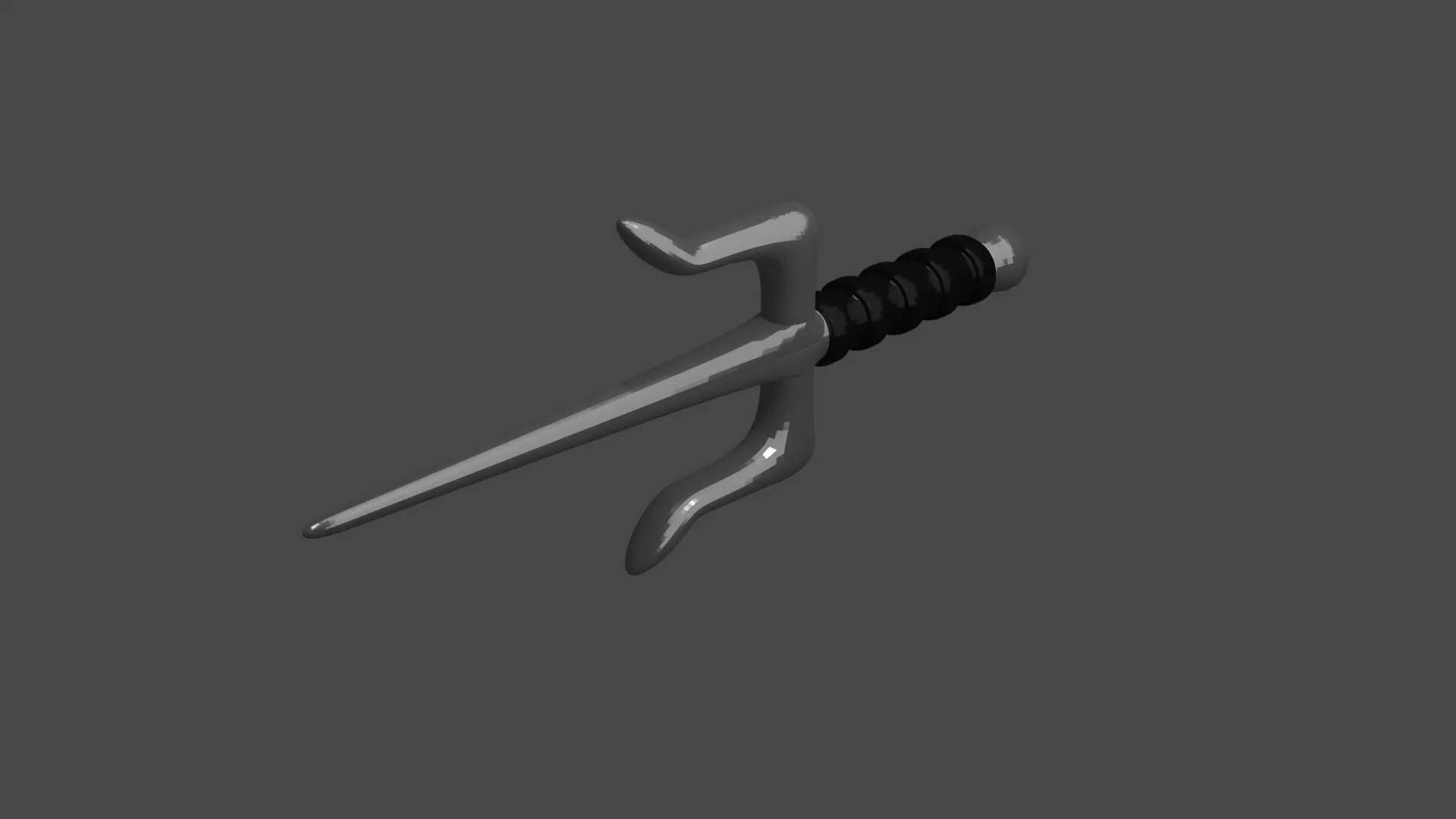
DESCRIPTION

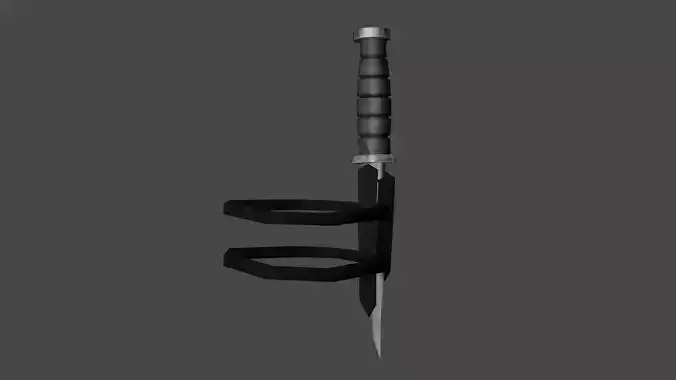
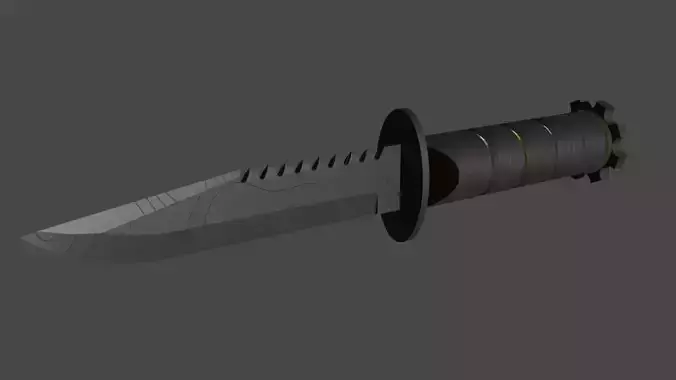
The sai is a traditional melee weapon used in Okinawa. The basic form of the weapon is that of a sharp metal prong with two curved sideprongs (yoku) projecting from the handle (tsuka). There are many different types of sai with varying prongs for trapping and blocking.Before its arrival in Okinawa, the sai was already being used in other Asian countries including India, Thailand, China, Vietnam, Malaysia, and Indonesia.[1] It may have been brought to Okinawa from one or several of these places simultaneously.[1] Silat practitioners typically refer to the sai either as chabang in Indonesian[1] or tekpi in Malay. Based on the Indian trisula, early evidence in the form of Japanese art shows that the chabang predates[when?] the sai's use in Okinawa and China.[1] The word trisula itself can refer to either a long or short-handled trident. Because the trisula was created in South Asia, it is possible that the sai originated in India and spread along with Hinduism and Buddhism. This is supported by the fact that the trisula is important as a Hindu-Buddhist symbol.

In Okinawa the sai was used by domestic police (ufuchiku) to arrest criminals and for crowd control. Use of the sai in Japanese martial arts was improved in 1668 by Moto Chohei, an Okinawan prince.[2]

The sai eventually reached Japan in the form of the jitte, which usually has only a single prong although some jitte have two prongs like a sai. Both are like truncheon weapons, used for striking, bludgeoning, and also for multiple punctures over different positions on the body.

REVIEWS & COMMENTS

See what other buyers think about this model - real feedback on quality,
accuracy, and usability.
There are no reviews or comments yet. Please be the first one to write it.
BEST PRICE GUARANTEED
Found this model cheaper on another marketplace? Let our support team know - we’ll match it.

Sai - ninja weapon Low-poly 3D model

Royalty Free License
Hire
Like this model to show appreciation to the designer.
See how many times this model was viewed.
Share this model to support the designer and boost their visibility.
File formats
STL
Stereolithography<br />File Size: 2.11 MB
OBJ
OBJ<br />File Size: 1.25 MB
ABC
Alembic<br />File Size: 1.49 MB
FBX
Autodesk FBX<br />File Size: 1.8 MB
BLEND
Blender<br />File Size: 1.8 MB
GLTF
glTF<br />File Size: 1.68 MB
PLY
Ply<br />File Size: 2.01 MB
DAE
Collada<br />File Size: 2.82 MB
Verified by CGTrader
Verified models are of higher quality as they have
passed CGT Standard technical and visual checks,
making them more professional-grade 3D assets.
Learn more.
FBX
This FBX file has successfully passed the CGT Standard technical and visual checks. The verification results are detailed in the section below.
File & scene
Binary FBX
Binary FBX file is more compact and faster to load and process.
Learn more
No unsupported objects
Unsupported objects:
- Lights
- Cameras
Learn more
Geometry
No N-gons
N-gons are polygons with five or more sides which might cause issues in certain processes like rendering or animation. Learn more
No faceted geometry
Faceted geometry uses flat surfaces without smoothing, which can look unrealistic on curves.
Learn more
Manifold geometry
Manifold geometry ensures all surfaces are properly connected, avoiding issues like edges shared by more than two faces.
Learn more
Textures & material
PBR textures
PBR textures simulate how light interacts with materials, making the model look realistic under different lighting.
Required PBR textures:
- Base Color
- Roughness
- Metalness
- Normal
Learn more
No embed textures
Embedded textures are stored inside the model file, increasing its size and sometimes causing compatibility issues.
Learn more
Square textures
Texture aspect ratio is the width-to-height ratio of a texture. Expected texture aspect ratio: 1:1
Learn more
Power of 2 texture sizes
Textures with dimensions in power of two (e.g. 512x512px, 1024x1024px) are used to optimize performance and memory usage.
Learn more
Assigned materials
Materials are applied to the 3D model to allow visualize a model's surface properties and appearance.
Learn more
UVs & naming
No UV overlaps
UVs overlap when multiple points on the 3D model's surface are mapped to the same point on the UV island causing texture stretching.
Learn more
UV unwrapped model
A UV unwrapped model means its 3D surface is flattened into 2D space, allowing textures to be applied accurately.
Learn more
Allowed characters
Allowed ASCII characters: a-zA-Z0-9-_
Learn more
Provided by designer
Information and details shared directly by the model's designer.
3D Features
The model includes animations (movement or actions) that can be played in supported software or engines.
The model has a skeleton or bone structure, making it ready for posing or animation.
PBR
Uses Physically Based Rendering materials, which give the model realistic lighting and surface properties.
Textures
The model includes image files (textures) that add color, patterns, or detail to its surfaces.
Materials
The model has material settings that define how surfaces look (color, shine, transparency, etc.).
UV Mapping
The model's surfaces are mapped to a 2D image, allowing textures to display correctly.
Plugins Used
Some external plugins were used to create the model. These may be required for full functionality.
3D printing
Indicates whether the designer marked this model as suitable for 3D printing.
Model is not 3D printable
The designer indicates this model is intended for digital use only (rendering, animation, or AR/VR) and not for 3D printing.
Geometry
59500 polygons
The total number of polygons (flat shapes) that make up the 3D model.
/ 59639 vertices
The number of points (corners) that define the shape of the model's polygons.
Unwrapped UVs
Publish date
Model ID
Chat