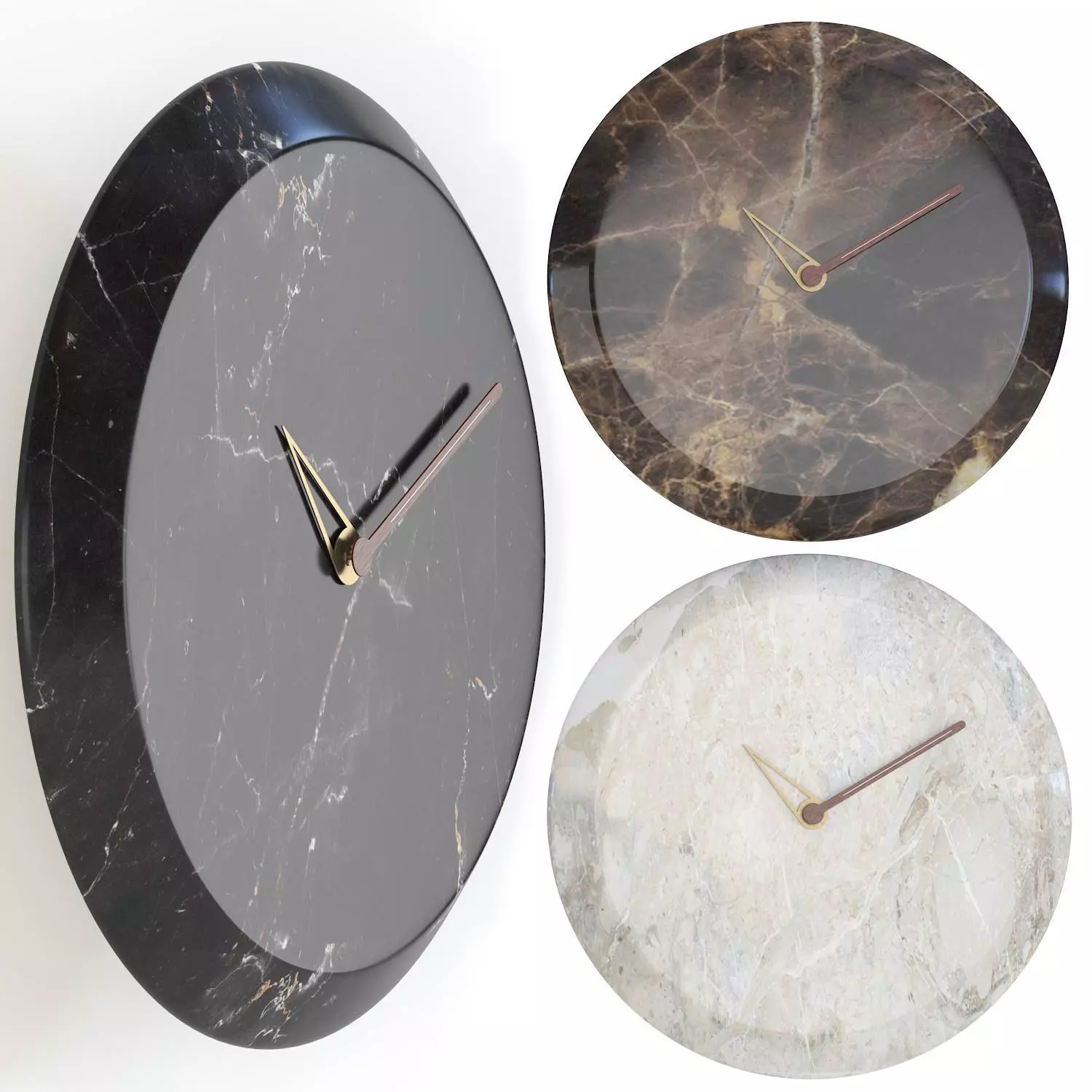
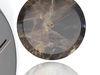
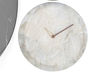
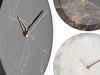
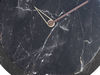
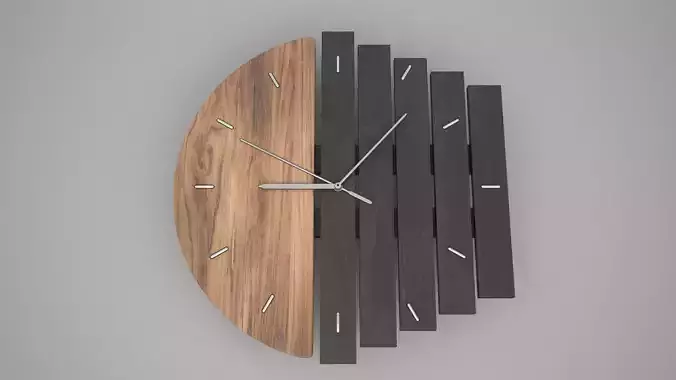
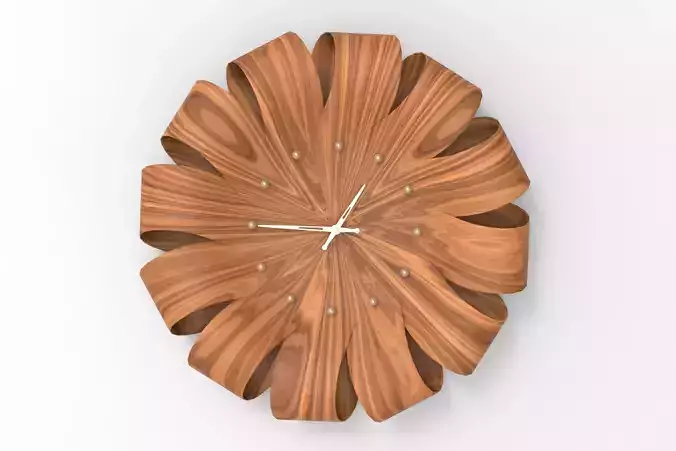
New Marble collection is now named BARI. Sahara Noir and Emperador fine marble finishes available
Finishes: Walnut stained solid wood and Emperador marble or Black stained solid wood and Sahara Noir marble
Mechanism: UTS German
Dimensions:
Small: Ø 9.4x H 3
Medium: Ø 12.6x H 3.5
$750.00
A clock or a timepiece[1] is a device used to measure and indicate time. The clock is one of the oldest human inventions, meeting the need to measure intervals of time shorter than the natural units such as the day, the lunar month and the year. Devices operating on several physical processes have been used over the millennia.
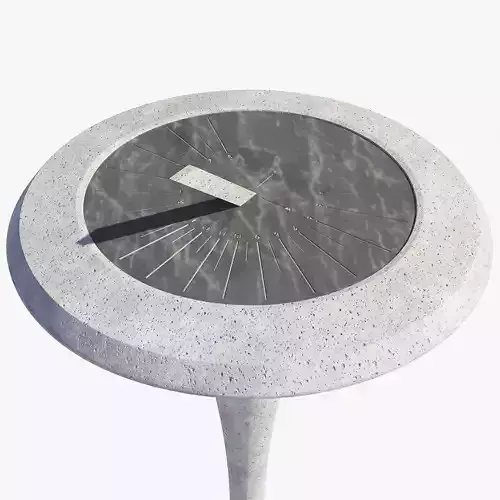
Some predecessors to the modern clock may be considered as clocks that are based on movement in nature: A sundial shows the time by displaying the position of a shadow on a flat surface. There is a range of duration timers, a well-known example being the hourglass. Water clocks, along with the sundials, are possibly the oldest time-measuring instruments. A major advance occurred with the invention of the verge escapement, which made possible the first mechanical clocks around 1300 in Europe, which kept time with oscillating timekeepers like balance wheels.[2][3][4][5]
Traditionally, in horology, the term clock was used for a striking clock, while a clock that did not strike the hours audibly was called a timepiece. This distinction is no longer made. Watches and other timepieces that can be carried on one's person are usually not referred to as clocks.[6] Spring-driven clocks appeared during the 15th century. During the 15th and 16th centuries, clockmaking flourished. The next development in accuracy occurred after 1656 with the invention of the pendulum clock by Christiaan Huygens. A major stimulus to improving the accuracy and reliability of clocks was the importance of precise time-keeping for navigation. The mechanism of a timepiece with a series of gears driven by a spring or weights is referred to as clockwork; the term is used by extension for a similar mechanism not used in a timepiece. The electric clock was patented in 1840, and electronic clocks were introduced in the 20th century, becoming widespread with the development of small battery-powered semiconductor devices.
Dimensions
D 9cm, W 32cm, H 32cm
New Marble collection is now named BARI. Sahara Noir and Emperador fine marble finishes available